Adopting a Cat in Morocco: Where, How and What to Expect (2026)
Why start with adoption
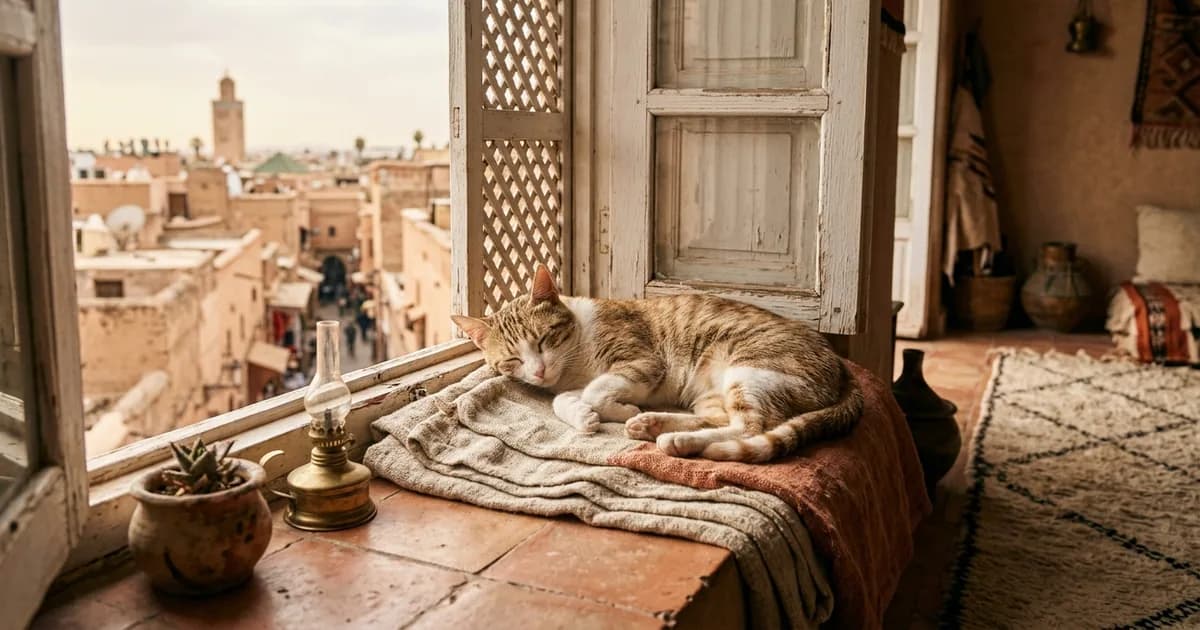
Every year in Morocco, countless cats are looking for a home. Many are baladis, the cat of the streets and rooftops here: hardy, resourceful, perfectly suited to the climate, and every bit as capable of affection as a pedigree cat.
In short: adopting gives a life to an animal that is waiting, usually for a contribution toward fees that already covers neutering and vaccines. It is the wisest, most economical and most responsible starting point, especially for a first cat. If you are comparing costs, we break them down in our cat price in Morocco guide.
Where to find a cat to adopt
There is no single place, but several complementary routes:
- Shelters and animal-welfare associations. The most direct path. Animals there are often already looked after, and the team knows their character.
- Veterinary clinics. Many connect litters that need homes with families. Just ask your vet.
- Neighbourhood word of mouth. A litter of kittens to place, a neighbour moving away: the best adoptions sometimes happen right next door.
- Online mutual-aid networks. Useful, but be careful: favour identifiable structures and always meet the animal before committing.
One tip: do not rush at the first photo. Take the time to talk with the shelter about the animal's character and what fits your daily life.
Where to adopt, city by city
The organisations that are actually active differ from one city to the next, and that is often what stalls an adoption. We have detailed, for each major city, the associations and shelters genuinely present, the steps, and the local climate constraints:
- Adopting in Casablanca: UMPA, SPANA and the volunteer networks
- Adopting in Rabat: the capital's associations
- Adopting in Marrakech: SPANA and the heat question
- Adopting in Tangier: Les Amis des Animaux, the Wildlife Sanctuary, and the humidity of the strait
- Adopting in Agadir: the large SARA shelter and Refuge Arrahma
- Adopting in Fez: the Arrahma shelter and the continental climate
- Adopting in Meknes: the AIEVI association and the Saiss climate
- Adopting in Tetouan: the ADAN association and northern humidity
If you live between Morocco and Europe, read our guide to adopting in Morocco and bringing your pet to France too: that timeline needs months of planning.
How the adoption goes
The process is simple, and it is there to protect the animal as much as you.
- The meeting. You see the cat, watch how it behaves, ask your questions.
- The conversation about your home. Housing, time at home, children or other pets: none of this is disqualifying, it just helps find the right match.
- Formalising it. You finalise the adoption for a contribution toward fees. It often covers neutering, vaccines and sometimes identification.
- An optional follow-up. Some structures check in during the first weeks. That is a good sign: it means they follow their animals.
Kitten or adult cat?
This is the real question to ask before the crush.
- A kitten is adorable and adapts quickly, but needs time, patience and attention in the first months.
- An adult cat already has a known temperament. The shelter can tell you whether it is calm, playful, sociable with children or other pets. For a first cat or a busy home, it is often the calmer choice.
The baladi, first
If one type of cat deserves to be put forward, it is this one. The baladi is genetically robust, it escapes many of the hereditary diseases of pedigree lines, and it handles the climate here with ease. Adopting one is both a generous and a sensible choice. To learn everything about it, see its full profile.
What Law 19.25 changes for adoption
This is new, and many families do not know it yet. Law 19.25 on stray animals, published in Official Bulletin no. 7533, finally gives adoption an official framework.
Two concrete consequences.
Adoption becomes a recognised route. Care centres may hand an animal to a person who wants to take it in, after checking they are able to care for it. That handover can be without charge or involve a contribution. It is no longer an informal arrangement: it is a regulated path, safer for the adopter and for the cat.
You have obligations from the moment the cat is home. It must be declared, permanently carry its identification number, and have an up-to-date health record. A change of owner is declared within 24 hours, a loss within 3 days.
In other words, the question to ask the shelter has changed. Ask now whether the cat is already identified and whether you are leaving with its health record. Everything is covered in our guide to Law 19.25 on stray animals.
Preparing for the arrival
Before bringing your cat home, set up the essentials: a quiet corner, a litter box, bowls, a scratching post, and a carrier. In the first days, let it explore at its own pace, without forcing it. A cat that feels safe gains confidence quickly. Plan a first vet visit too, to start on the right foot.
Still unsure?
Adopting is a twelve to eighteen year commitment. The right cat is not the cutest in the photo, it is the one that fits your life: your home, your time, your energy. Take a few minutes to get clear on what truly suits you before you decide. It is the best gift you can give your future companion.