Native to Morocco
Baladiبلدي
Origin: Morocco
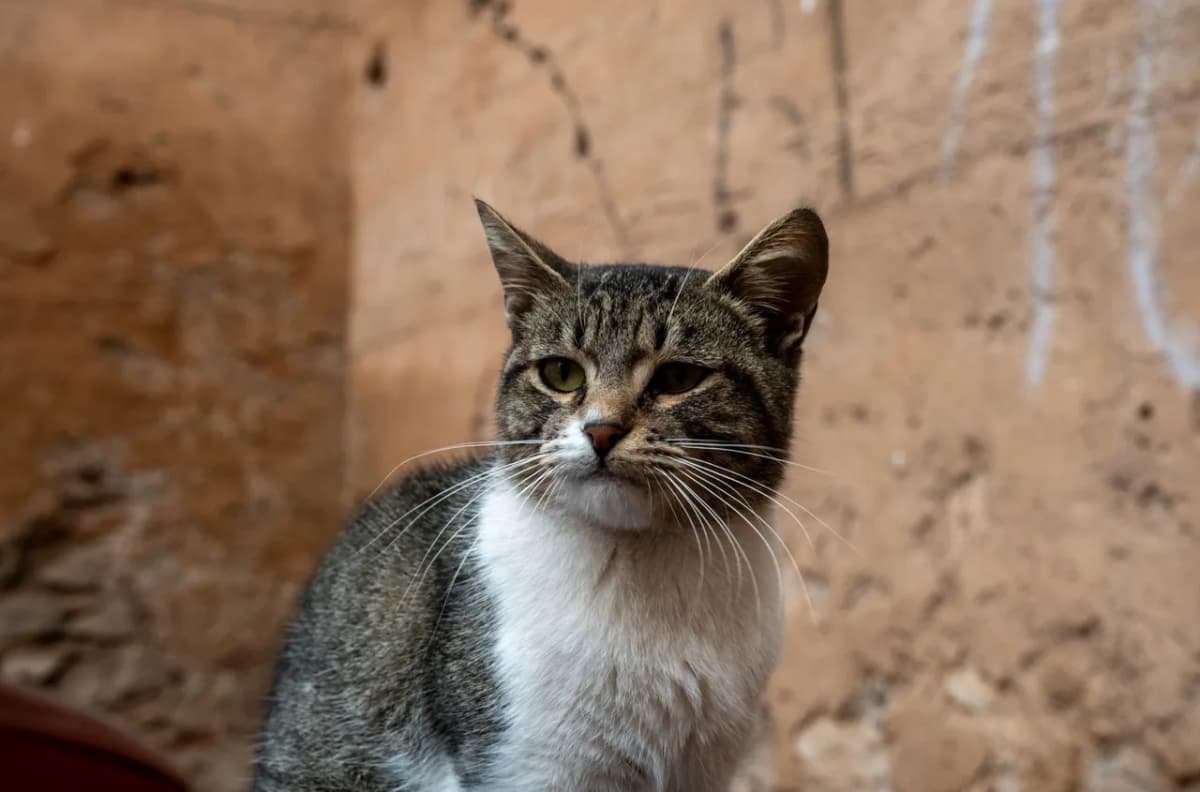
The baladi is Morocco's common cat, born of the streets and medinas. Not a breed but a local population, hardy and climate-adapted. Sociable or reserved depending on each one's history, it is most often adopted for free and makes an excellent first companion.
The cat of Moroccan streets and rooftops. Every one is an individual; many are sociable, resourceful, and attached to their home.
Heat (Morocco)
Handles heat well
First pet
Good first pet
Availability
Adoption (shelters)
Know this first
Adapted to the climate here, it sidesteps the inherited diseases of pedigree lines. On adoption: sterilization, a FeLV/FIV test, and the rabies vaccine. This is the companion Pettopia puts first.
For you if
- A first pet, on a small budget
- Anyone who wants to adopt rather than buy
- A hot climate, which it handles naturally
Think twice if
- Anyone after a specific look or pedigree
- Anyone wanting a temperament guaranteed in advance
Care essentials
- Sterilize as soon as possible
- FeLV/FIV test and vaccines on adoption
- Two play sessions a day, vertical space
- Regular dewormer and parasite control
Baladi, beldi, street cat: what are we actually talking about?
Baladi comes from the Arabic بلدي, meaning "of the country", "local". The word does not describe a breed in the sense cat registries use, but the whole population of cats born and shaped here, by the street and by the climate, with no written standard and no human selection.
That distinction matters. A breed is a standard: a silhouette, a coat, a head, fixed by a club and verifiable on a pedigree. The baladi has none of that, and that is exactly its strength. Its genetic diversity is that of a free population, not of a line narrowed down to a few breeders.
You will also hear "beldi", from the same root, used mostly for dogs. And you will see listings for "Shirazi": that one is an imported Persian, not a Moroccan cat.
Why it copes so well with the Moroccan climate
The baladi is short-haired in the vast majority of cases, medium in build, with a normal muzzle. Those three traits, which no club decided, are exactly the ones that help a cat shed heat: little undercoat to carry, a reasonable body surface, and clear airways.
Compare that with a Persian, long-coated and flat-faced: it carries both thermal handicaps in a country that regularly passes 40 degrees in summer. The baladi does not need air conditioning to be comfortable, it needs shade, fresh water and a quiet corner.
It also sidesteps the inherited conditions that weigh on closed lines, such as the polycystic kidney disease closely tracked in Persians. That does not make it invulnerable: it catches what every cat catches, and a street cat often arrives carrying parasites. It means it starts without a genetic debt.
What you actually meet in a shelter
A baladi's character is not written in a standard, it is written in its history. A kitten born in a foster home and handled early will often be confident and playful. An adult that lived outdoors will keep its distance at first, and will need weeks rather than days.
That is why the right question at the shelter is not "what is its temperament?" but "how long has it been here, how has it reacted to people, has it lived indoors or outdoors?". A serious association answers those three precisely.
One practical point that gets forgotten: ask for the FeLV/FIV test. Those are the two viruses that genuinely change how you care for a cat that came from the street, especially if you already have a cat at home.
Is a Baladi right for you?
Temperament is not everything: your space, your time, and the climate matter as much. Let us see if your life fits.
Common questions
Is a baladi healthy?
Generally yes: it escapes the inherited diseases of closed breeds. Still do the FeLV/FIV test on adoption and keep up with vaccines.
Where to adopt a baladi?
Through shelters (SPANA, local associations) or trap-neuter-return campaigns. Many are waiting for a home.
In the same family
Veterinary literature on mixed-cat health; Moroccan context (sterilization, rabies, TNVR) noted in 2026.