Pedigree
Persianشيرازي
Origin: Persia (Iran)
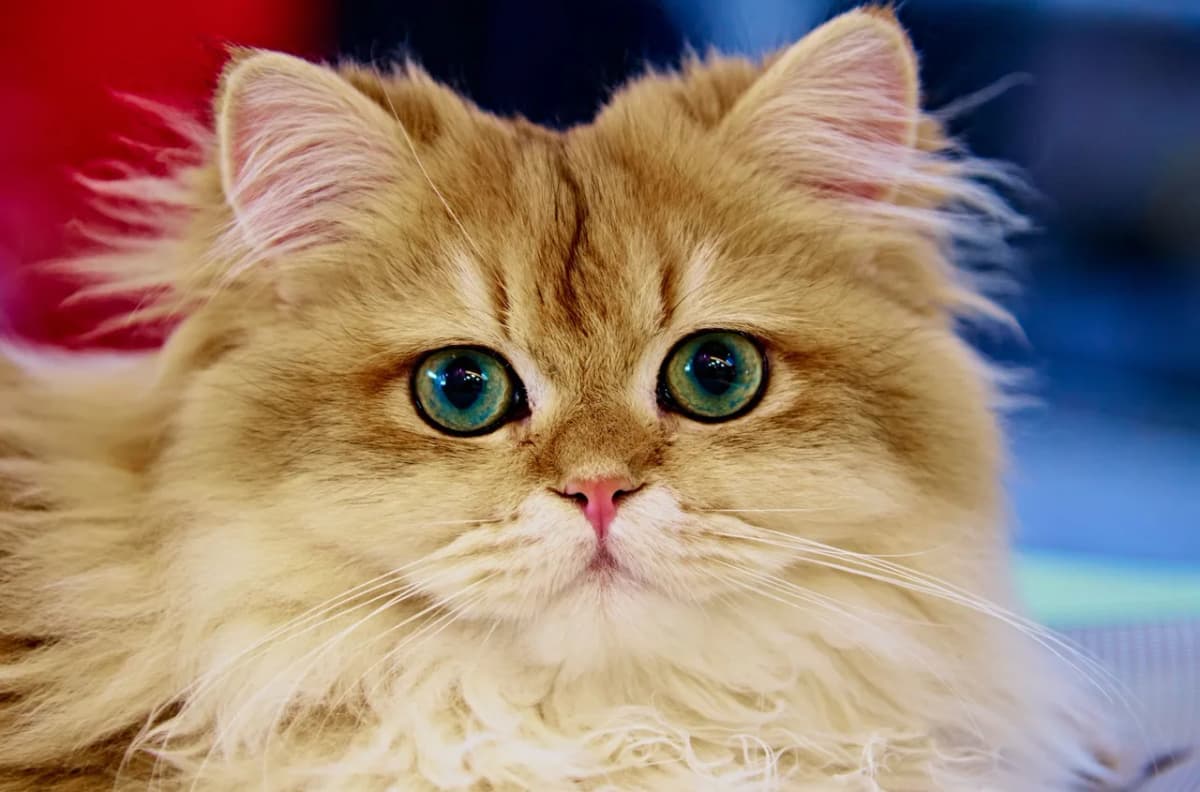
The Persian is a calm, long-haired companion cat from Persia. Very common in Morocco, it needs daily upkeep and carries two health realities to know: a flat face poorly suited to heat, and an inherited kidney disease (PKD) that is screenable.
Calm, quiet, low-energy. The living-room cat par excellence.
Heat (Morocco)
Heat-sensitive
First pet
Depends on the home
Availability
Market / breeders
Know this first
The apparent calm hides a real upkeep budget: daily brushing, a flat face (breathing and tear-staining) poorly suited to heat, and polycystic kidney disease (PKD), common but screenable by DNA test. Ask for the line's test results.
For you if
- A calm, homebody household
- Anyone who accepts daily brushing
- A cool, shaded indoor space in summer
Think twice if
- A hot home without air conditioning
- Anyone wanting a low-maintenance cat
Care essentials
- Daily brushing, occasional baths
- Eye cleaning (tear-staining)
- Cool and shade in summer
- PKD test of the line before buying
Persian or Shirazi: the same cat in Morocco
In Morocco, the Persian cat is often called a Shirazi cat, after the city of Shiraz. In listings, both words describe the same type of cat in practice, sometimes crossed. It is a long-haired, flat-faced indoor cat, calm and attached to its routines, whose upkeep is heavy all year round.
| Trait | What to know |
|---|---|
| Size | 3 to 5.5 kg on average |
| Coat | Long, dense, with a substantial undercoat |
| Head | Flattened face, more or less pronounced by line |
| Temperament | Gentle, calm, homebound, undemonstrative |
| Upkeep | Very high: daily brushing |
| Heat tolerance | Low, especially with a very flat face |
The most requested coats in Morocco are white, chinchilla (a light coat with darker tips) and the cream or grey-and-white bicolours. On a white coat, the staining around the eyes shows quickly. For a home that mainly wants a calm cat, colour comes after health: the nose, the eyes and the quality of the coat.
Persian cat prices in Morocco in 2026
We recorded the listings for Persian, Shirazi and Himalayan cats on Avito on 17 October 2026: 282 listings showed a price.
| Marker | Price |
|---|---|
| Median price | 1,800 MAD |
| Half the listings | between 1,500 and 2,500 MAD |
| Listings above 4,000 MAD | 4 of 282 |
The price rises with a young kitten, a vaccination record, a documented pedigree and the sought-after coats. Listings at 1 MAD, 10 MAD or "price unspecified" mostly exist to attract messages: they do not state the real figure.
The purchase price is only the entry ticket. For the first days, add:
- a check-up consultation at the vet;
- any vaccines or booster that are due;
- a brush, a metal comb and compresses;
- every month, coat and eye upkeep.
A Persian bought for 1,200 MAD can quickly represent 2,000 MAD or more. Read: the price of a cat in Morocco and the real cost of a pet in Morocco.
The Persian cat and the Moroccan heat
Between June and September several Moroccan cities reach 35 to 45 degrees, and the Persian copes badly with those peaks: flat face, long coat, clumps close to the skin. The basics:
- several bowls of fresh water, changed two to three times a day;
- the balcony or terrace closed during the hottest hours;
- cool tiled rooms and steady shade;
- ventilation or air conditioning if your home overheats;
- no close shave without veterinary advice: a targeted hygienic trim is often enough.
An overheating Persian becomes less active: it lies fully stretched out, eats less, breathes faster and seeks cold floors. Panting, weakness or noisy breathing: this is no longer about comfort, it is a veterinary emergency. Read: pet care in Moroccan summers.
Brushing and eyes: the daily routine
For a Persian cat, daily brushing is the baseline: five to ten minutes a day beats an hour of detangling at the weekend. Work behind the ears, under the forelegs, on the belly and around the hindquarters. The right pair: a soft brush, then a metal comb. If the comb catches everywhere, the routine is already too spaced out.
Eye discharge is common in Persians, because the flat face reduces natural drainage. Clean the corners of the eyes almost every day, sometimes morning and evening in hot weather, with a clean compress and a clean side per eye. Brownish staining is common; marked redness, pain, an eye held shut or very thick discharge need a consultation.
In summer, car journeys and waiting tire a Persian a lot: if you have it groomed, home grooming spares it the trip. Read: cat grooming in Morocco.
Feeding and hydration in summer
A Persian cat sometimes drinks less than you would expect. In summer, suitable wet food, offered then removed if it sits out, helps some cats hydrate better. Keep dry food dry and away from heat, and never leave bowls in full sun. A Persian that refuses to drink, becomes listless or pants needs a vet without delay.
Persian cat health
The Persian cat is not fragile as a rule, but some lines stack known risks. The flatter the face, the more the breathing, eyes and teeth need vigilance.
- Inherited polycystic kidney disease (PKD): a major point in the breed, screenable by DNA test. Ask for the parents' results.
- Difficult breathing: very brachycephalic Persians tolerate heat and exertion less well.
- Weeping eyes: frequent, sometimes chronic, worsened by dust.
- Teeth: their alignment is often poorer, which encourages tartar and inflammation.
A study by Sieslack and colleagues, published in PLOS ONE in 2021 (DOI), shows that the flatter the Persian's face, the more airway, eye and tooth-alignment problems increase.
In Morocco, rabies still circulates: the kitten's vaccine schedule and boosters are set with the vet. This content does not replace a veterinary diagnosis. Read: dog and cat vaccination in Morocco, the complete schedule.
Before you say yes
Ask for videos of the cat moving. Check whether it breathes with its mouth closed, whether its eyes are clean, whether its nose is clear and whether its coat falls freely, without matted plaques. Have it examined by a vet soon after it arrives.
Ask yourself three questions too:
- can you brush it every day, without skipping three evenings in a row?
- does your home stay bearable when your city gets very hot?
- does your budget include care, not just the listing?
Is a Persian right for you?
Temperament is not everything: your space, your time, and the climate matter as much. Let us see if your life fits.
Common questions
Does the Persian handle Moroccan heat?
Poorly. The long coat and flat face limit its cooling. Shade, coolness, and summer vigilance are not optional.
How do I avoid the kidney disease?
PKD is screenable by DNA test. Buy from a breeder who tests their parents and shows you the results.
How much does a Persian cat cost in Morocco?
Across 282 priced listings recorded on Avito on 17 October 2026, the median price is 1,800 MAD, and half the listings sit between 1,500 and 2,500 MAD. Very few go above 4,000 MAD. Add the first costs to the purchase: a consultation, vaccines and equipment quickly take the total past 2,000 MAD.
What are the disadvantages of a Persian cat?
They are real. The flat muzzle makes breathing harder, which matters a great deal in heat. The long coat needs daily brushing, or mats form and become painful. The eyes often weep and need cleaning almost every day. The breed is also predisposed to inherited conditions, notably polycystic kidney disease. This is not a low-maintenance cat.
How can I recognise a real Persian cat?
A pedigree Persian has a round head, a short muzzle, small ears and a very dense coat with a ruff. In Morocco many listings sell crosses under the Persian or Shirazi label. Ask to see the parents, the vaccination record and, if a pedigree is claimed, the documents.
Persian or Shirazi: is it the same cat?
Yes. In Morocco, Shirazi, after the city of Shiraz, means the Persian cat in practice, sometimes with more or less crossing. If you are looking for a Persian, search both words in the listings.
In the same family
PKD prevalence and brachycephalic conformation: veterinary literature (digest).