Dog and Cat Vaccination in Morocco: The Complete 2026 Schedule
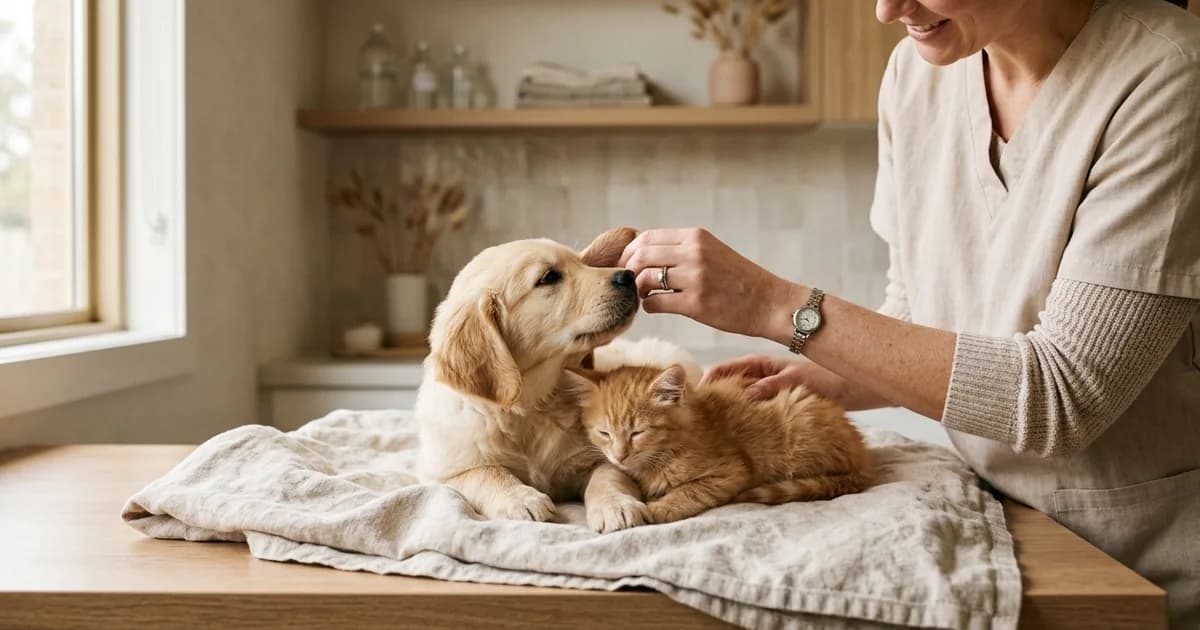
The gesture that protects for a lifetime
Vaccinating your animal is not an administrative formality. It is what protects it from the most serious diseases, some of them deadly and very present in Morocco.
In short: in Morocco, rabies vaccination is the absolute priority, because the disease still circulates. To it are added the core vaccines, especially in young animals, and an annual booster that also serves as a health check. The exact schedule is always set by the vet.
This article is informational. It does not replace a vet's advice; only a vet can set your animal's vaccination protocol.
Why vaccination matters so much in Morocco
Rabies remains a public-health issue in Morocco. Transmitted mainly by dogs, it is fatal once symptoms appear, in animals and humans alike. Vaccinating your dog protects it, but also protects your family and those around you.
Beyond rabies, the young animal is vulnerable to highly contagious diseases that circulate everywhere: parvovirus, distemper, feline panleukopenia. The vaccine remains, by far, the most effective protection.
The puppy schedule
A puppy receives protection from its mother that fades over the weeks. Vaccination then takes over, in stages.
| Age | Usually |
|---|---|
| 6 to 8 weeks | First injection (core vaccines) |
| 10 to 12 weeks | Booster + often rabies |
| 14 to 16 weeks | Final booster of the primary series |
| Every year | Annual booster + health check |
The dog's core vaccines target distemper, infectious hepatitis, parvovirus and leptospirosis, to which rabies is added.
The kitten schedule
The principle is the same in kittens, with different target diseases.
| Age | Usually |
|---|---|
| 8 weeks | First injection (panleukopenia, cat flu) |
| 11 to 12 weeks | Booster + often rabies |
| Every year | Annual booster + health check |
The cat's core vaccines protect against panleukopenia and cat flu. For a cat that goes outdoors, the feline leukaemia vaccine is often recommended.
The adult animal: do not skip the booster
Once adult, the animal needs an annual booster. This appointment does far more than renew protection: it is a chance for a full examination, where the vet catches a weight, dental, skin or behaviour problem early.
Skipping a year leaves a door open. Consistency is the key.
Beyond the vaccine: deworming and parasite control
The vaccine does not do everything. Complete protection also means:
- Deworming: several times a year, especially in young animals.
- External parasite control: flea and tick treatment, essential in spring and summer, which also reduces the risk of transmitted diseases like leishmaniasis.
- Identification: a microchip, often paired with the rabies vaccine, useful if the animal is lost and for travel.
Read: Leishmaniasis in dogs in Morocco, prevention and treatment.
The takeaway
Vaccination is the foundation of a long, healthy life. In Morocco, rabies makes it a non-negotiable priority. The rest is consistency: a schedule followed from the earliest age, then an annual booster that watches over everything else.
The right instinct: a trusted vet, from the moment the animal arrives, who will set the right schedule.
Read next: How much does a pet cost in Morocco?
General information for 2026, for educational purposes. Your animal's vaccination protocol is solely a matter for your vet.