Canine Leishmaniasis in Morocco: Vaccine, Prevention and Treatment in 2026

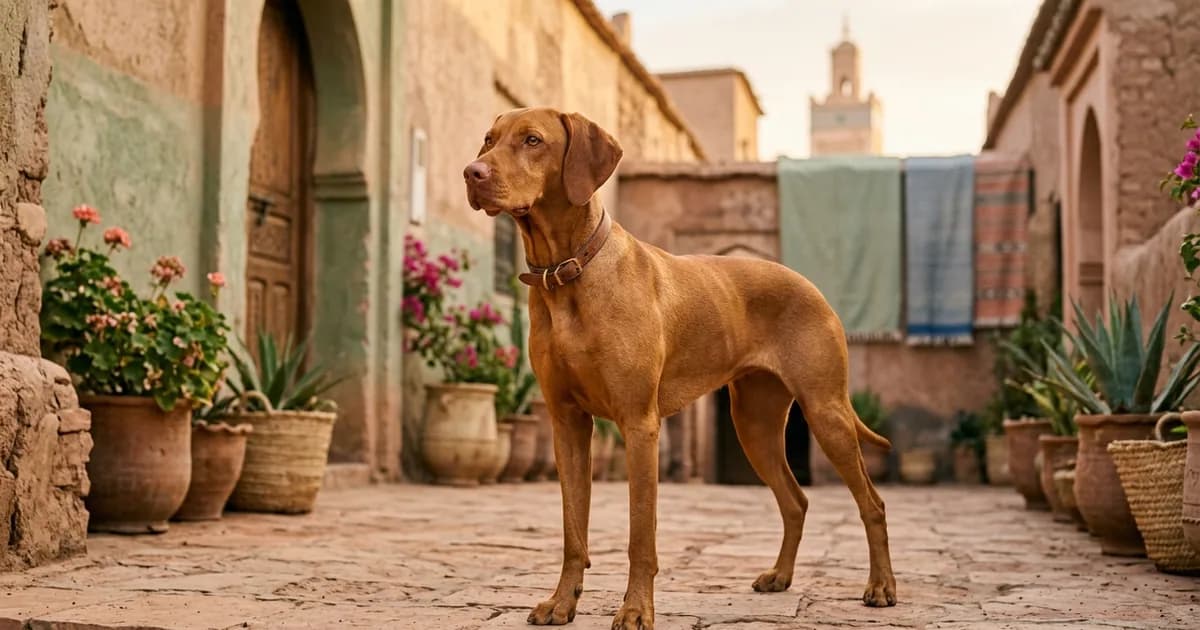
Marrakech, 7.30pm. The light drops, the heat eases, and your dog wants to stretch the walk out. That is exactly when sand flies become most active.
Canine leishmaniasis is a chronic parasitic disease caused in Morocco mainly by Leishmania infantum and transmitted by the bite of sand flies of the genus Phlebotomus. Endemic in several Moroccan regions, it can affect the skin, the lymph nodes, the kidneys and general condition, sometimes long after infection.[1][2]
Leishmaniasis is a real risk in Morocco
In Morocco this is not a theoretical disease. Recent studies suggest well-established circulation, with some areas more exposed than others.[1][2]
The regions most often cited as risk areas are:
- the Marrakech region and its surroundings
- Souss-Massa
- several coastal zones, both Atlantic and Mediterranean
- the foothills of the Middle Atlas
- some southern areas where the climate favours the vector
It mainly affects dogs that live outdoors, guard a house, hunt, or go out a lot in the warm season.[1][2]
The vector is tiny. A sand fly is more discreet than a mosquito, and active mostly from dusk to dawn. Moroccan entomological data place the most active period between May and October, peaking in summer and early autumn depending on the region.[3]
Transmission happens through the bite. Not dog to dog by simple contact. Not by petting a sick animal. Not by sharing a bowl.[1][4]
Leishmaniasis is only one of the health risks specific to the Moroccan climate. For the wider picture, our guide to common dog diseases in Morocco sets out the full context.
Veterinary note: living in or travelling to an endemic area is not a diagnosis. If your dog is exposed, a vet can assess the risk level and say whether to test, vaccinate, or strengthen protection.
Recognising the symptoms
The disease often misleads families because it moves slowly. A dog can look normal for months, then show only a few skin lesions, mild fatigue, or moderate weight loss.[1][4]
| Stage | What you might notice at home | What the vet often looks for |
|---|---|---|
| Early | mild tiredness, dull coat, small crusts, scaling, slightly enlarged lymph nodes, subtle weight loss | exfoliative dermatitis, lymphadenopathy, early anaemia, hyperglobulinaemia |
| More advanced | clear weight loss, lesions around the eyes or muzzle, abnormally growing claws, lameness, increased thirst, reduced appetite, red eyes | kidney involvement, proteinuria, ocular lesions, marked blood abnormalities |
In Rabat, the Moroccan study found mainly enlarged lymph nodes, dermatological problems, weight loss and exercise intolerance.[1]
It is often missed early because the first signs are subtle. And because incubation can be long, many families never connect these changes to a bite from the previous season.
Veterinary note: no symptom list replaces a clinical examination. If you notice weight loss, skin lesions that persist, enlarged lymph nodes or unusual tiredness, book an appointment.
Diagnosis
Diagnosis does not rest on a photo or a single symptom. It combines context, clinical examination and targeted tests.[1][4]
The most used tools are:
- serology, to look for antibodies against Leishmania
- PCR, useful to detect parasite DNA, especially on suitable samples
- a full blood count, to spot anaemia, hyperglobulinaemia or other abnormalities
- urine analysis and kidney workup, since the kidneys are among the most threatened organs
A vet may also recommend lymph node cytology, a smear, or further tests depending on the signs present.
LeishVet recommends interpreting results together, never in isolation. An exposed dog can be positive without being seriously ill. Another can be very symptomatic with results that need confirmation.[4]
Testing is particularly relevant in three situations:
- your dog lives year-round in an endemic area
- it spends summer or autumn in Marrakech, Souss-Massa, on the coast, or near the Middle Atlas
- it returns from a long stay, a hunting season, or outdoor boarding in a risk area
In those cases, many vets recommend testing before the risk season if a vaccine is being considered, then a check after exposure if signs appear or the risk profile is high.[4]
Veterinary note: only a vet can choose the right test at the right time. A misread result can wrongly reassure, or worry you for nothing.
The leishmaniasis vaccine in Morocco
This deserves a nuanced answer. Yes, vaccines exist. No, they do not make a dog invulnerable. Clinical trials and veterinary guidance mainly suggest a reduced risk of developing a severe clinical form in seronegative dogs, provided vaccination is paired with genuine bite prevention.[4][5][6]
The names you will meet most often are:
- CaniLeish
- LetiFend
In practice, availability in Morocco varies. Some clinics can order them in, others do not keep stock. It depends on the city and the time of year.
The protocols differ by product:
| Vaccine | Usual schedule | What to keep in mind |
|---|---|---|
| CaniLeish | 3 injections 3 weeks apart, then an annual booster | the more demanding protocol, but well documented |
| LetiFend | 1 injection, then an annual booster | simpler, but also requires a seronegative dog before vaccination |
For a Moroccan budget, expect roughly 400 to 800 MAD for a vaccination protocol or booster, sometimes more if the product must be ordered or if a consultation and prior serology are added. These are realistic ranges, not fixed prices.
The most important point stays this: the vaccine never replaces the collar, the spot-on, or avoiding the high-risk hours. It adds a layer of protection. It does not fully close the door.[4][5][6]
Veterinary note: vaccination should be decided with a vet, after assessing the dog's lifestyle, age, immune status and any prior testing.
Everyday prevention
Prevention works best when you layer several simple habits.
The first pillar is sand fly repellents. Veterinary guidance points mainly to spot-on treatments and certain pyrethroid-based insecticidal collars suitable for dogs, because they reduce sand fly bites.[4]
The second pillar is timing. If your dog lives or stays in a risk area, avoid long walks at dusk and dawn between May and October. Those are the vector's preferred hours.[3][4]
The third pillar is where the dog sleeps.
In endemic areas, many vets advise keeping the dog indoors at nightfall. If that is not possible, a fine-mesh net can help. This detail matters: sand flies are smaller than ordinary mosquitoes. A mesh that is too wide lets the problem through.
You can also reduce risk around the living area:
- avoid bedding against damp walls or areas rich in organic matter
- clean the shelter and its surroundings regularly
- limit unnecessary night outings during the risk season
- check the skin, ears, muzzle and claws while brushing
Regular grooming does not prevent the disease. It does help you spot skin lesions and changing claws early. The same habits protect against ticks and fleas, and careful skin checks tie into our advice on skin care in the Moroccan climate.
Veterinary note: antiparasitic products are not interchangeable. Some do not suit every dog, and some dog products are toxic to a cat in the same home. Always confirm with your vet.
Treatment
Think control, not definitive cure. Veterinary guidance describes long-term management, with possible clinical improvement, a lower parasite load, then regular monitoring to catch relapse or kidney involvement.[4][7][8]
The molecules most often cited are:
- Allopurinol, often used over several months
- Meglumine antimoniate, usually injected, often in combination
- Milteforan or miltefosine, an oral alternative in some protocols
The choice depends on the stage, the kidneys, bloodwork, weight, tolerance and budget. Two affected dogs do not necessarily leave with the same prescription.
Cost matters in real life too. For a dog diagnosed and then treated properly in Morocco, care can reach 2,000 to 5,000 MAD for a full cycle including consultations, tests, medication and the first follow-ups. If the kidneys are involved, the budget can go higher.
Duration takes patience. Some protocols last a few weeks. Others require several months of allopurinol, then repeated checks. Even when the dog improves, follow-up should not stop abruptly.
Vets commonly monitor:
- general condition and weight
- skin and eyes
- globulins and blood count
- kidney function and proteinuria
- the overall clinical response over the weeks
Studies suggest structured care clearly improves quality of life, but they also remind us the disease can relapse. That is why we speak of management, not final victory.[4][7][8]
Veterinary note: never improvise a protocol at home. Drug choice, doses and follow-up rhythm must be decided by a vet after a full workup.
What every dog owner in Morocco should do
If your dog lives in a risk area, or stays in one often, keep this list simple:
- put repellent protection in place from May to October
- avoid long walks at dusk and dawn
- keep your dog indoors at nightfall where possible
- check skin, claws, eyes and weight monthly
- ask about annual testing if you live in an endemic area
- discuss vaccination if your dog is seronegative and heavily exposed
- plan a check before and after a long stay in a risk area
- never dismiss weight loss or a skin lesion that lingers
When the search for answers comes too late, the disease has usually already advanced. In Morocco, solid prevention, a well-chosen test and regular follow-up beat everything else.
Still unsure which animal fits your life? Our matching tool weighs your real daily life, heat and walks included, against what each species actually needs, and gives you an honest answer.
Veterinary note: even without obvious symptoms, a heavily exposed dog sometimes deserves screening. Decide the right monitoring rhythm with your vet.
Sources
[1] Sahibi, H., Nhammi, H., Elamrani, A., et al. (2021). Canine Leishmaniasis in Morocco: A Descriptive Prospective Clinical Study. BioMed Research International. https://doi.org/10.1155/2021/6304127
[2] El Mouhdi, K., Sahibi, H., et al. (2022). Prevalence and risk factors of canine leishmaniasis in Morocco: a systematic review and meta-analysis. Journal of Parasitic Diseases. https://doi.org/10.1007/s12639-022-01521-2
[3] Talbi, F. Z., El Ouali Lalami, A., Janati Idrissi, A., et al. (2015). Leishmaniasis in Central Morocco: Seasonal Fluctuations of Phlebotomine Sand Fly in Aichoun Locality, from Sefrou Province. Pathology Research International. https://doi.org/10.1155/2015/438749
[4] Solano-Gallego, L., Miró, G., Koutinas, A., et al. (2017). LeishVet guidelines for the practical management of canine leishmaniosis. Parasites & Vectors. https://doi.org/10.1186/s13071-017-2028-2
[5] Miró, G., Gálvez, R., Fraile, C., et al. (2017). A randomized field efficacy trial of the LiESP/QA-21 (CaniLeish) vaccine in naive, healthy dogs exposed to natural Leishmania infantum transmission. Veterinary Immunology and Immunopathology. https://doi.org/10.1016/j.vetimm.2017.08.007
[6] Oliva, G., Nieto, J., Foglia Manzillo, V., et al. (2019). Proteo-genomic evidence for the efficacy of a recombinant protein vaccine against canine leishmaniasis (LetiFend) in field conditions. Vaccine. https://doi.org/10.1016/j.vaccine.2018.12.060
[7] Maia, C., Pereira, A., Cristóvão, J. M., et al. (2010). Miltefosine treatment in canine leishmaniasis: clinical, parasitological, and serological follow-up. Veterinary Parasitology. https://doi.org/10.1016/j.vetpar.2009.12.042
[8] Noli, C., Auxilia, S. T., et al. (2019). Treatment of canine leishmaniasis with meglumine antimoniate plus allopurinol. Veterinary Parasitology. https://doi.org/10.1016/j.vetpar.2019.109131